Category: Uncategorized

  • Can AI decide whether you’re paying attention in class?

    You might be surprised by what EU rules say! AI systems used to infer students’ emotions in educational settings are prohibited, with limited medical or safety exceptions. This includes using emotion recognition to judge students’ interest or attention.

    ⚠️ Meanwhile, AI systems used for grading, admissions or monitoring prohibited behaviour during exams are classified as high-risk under the EU AI Act, meaning stricter safeguards apply.

    💭So here’s a question worth asking: Who controls the technology making decisions about your education?

    The European Commission’s updated 2026 Guidelines on the Ethical Use of AI and Data in Teaching and Learning explore these issues, including transparency, privacy, fairness and human oversight.

    Curious about what AI can and cannot do in education?

    👉 Explore the official EU guidelines
    https://op.europa.eu/en/publication-detail/-/publication/f692aa0b-17a7-11f1-8870-01aa75ed71a1/language-en

    #DC4Democracy #AIinEducation #DigitalRights #ErasmusPlus

    Post by
    Maja Šarić
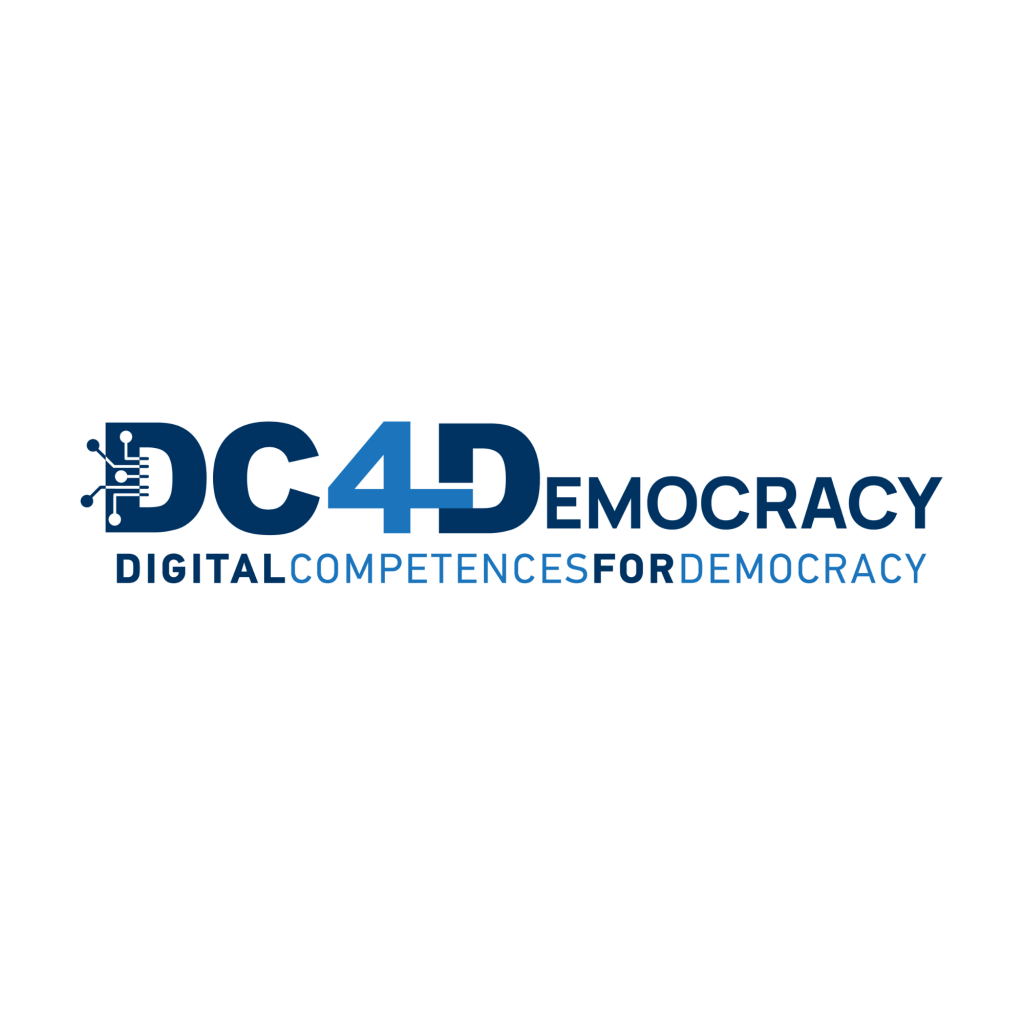
  • DC4Democracy at the 6th Citizen Participation and Deliberative Democracy Festival in Brussels!

    DC4Democracy at the 6th Citizen Participation and Deliberative Democracy Festival in Brussels!

    We are pleased to share that during the previous week, our colleague Rafail Promikyridis attended the 6th Citizen Participation and Deliberative Democracy Festival in Brussels, joining discussions on the future of citizen engagement and democratic participation across Europe.

    💡 The discussions and insights from the Festival are particularly relevant to DC4Democracy, as our project focuses on developing innovative approaches and tools for assessing digital deliberation competences, helping educators better understand and evaluate students’ skills in participating in online discussions about public issues.

    🌍 Events like this provide valuable opportunities to exchange ideas, learn from existing practices, and reflect on how the assessment of digital deliberation competences can support democratic education and meaningful participation.

  • Before you can assess a competence, you have to understand it. So DC4Democracy started by listening.

    This autumn, project partners in Norway, Greece, Croatia and Lithuania have been talking with the people who know online democratic debate from the inside:

    🧑‍🎓 👩‍🎓 Students in lower secondary and VET education, in focus groups about how they meet information, disagreement and public issues online

    👩‍🏫🧑‍🏫 Teachers, in focus groups about what they see in the classroom and what they would need to teach these competences

    🥼 Experts in digital citizenship, media literacy and education policy, in individual interviews

    In total, more than a dozen focus groups and around ten expert interviews. Every session has been documented in a shared format so the voices from four countries can be compared and combined.

    🗺️ What comes out of this is the Digital Deliberation Competence Map, the foundation for the assessment framework and the classroom toolkit the project will pilot in 2027.Thank you to every student, teacher and expert who gave us their time.

    #DC4Democracy #ErasmusPlus #DigitalDemocracy #DigitalCompetences #DemocraticDeliberation #DigComp #DigitalCitizenship

    Post by
    Eirik Jåtten

  • Behind the scenes of DC4Democracy: What does it take to participatedemocratically online?

    Over the past months, our partners have conducted two systematic literature reviews, examined 34 policy documents and competence frameworks, and gathered insights from teachers, students and experts across Europe.

    💡 One key insight? Recognising misinformation doesn’t necessarily mean knowing how to verify it!

    We’re now bringing this evidence together in our Digital Deliberation Competence Map, designed for learners aged 12–18.
    Our emerging framework focuses on three essential abilities:

    🔍 Think critically – evaluate information, claims and evidence.

    💬 Engage constructively – communicate across different perspectives and disagreements.

    ⚖️ Act responsibly – understand digital rights and participate meaningfully in democratic life.

    📢 For policymakers, an important question emerges: Are our education systems assessing what young people can actually do, rather than what they believe they can do?

    Stay tuned!
    #DC4Democracy #DigitalDemocracy #EducationPolicy #ErasmusPlus

    Post by
    Maja Šarić

  • How can we foster digital competences to enable safe, inclusive, and constructive democratic deliberation in the digital age?

    That is the key research question of the new EU project DC4Democracy!
     
    🎯 What do we aim to achieve?
    Grounded in scientific research, conducting systematic literature and policy reviews as well as expert interviews, focus groups and a Delphi study, the two main objectives of DC4Democracy are:
    🔹 First, to develop a multilingual conceptual framework for assessing Digital Competences for Democratic Deliberation based on the educational measurement theory, competence modelling, and iterative, participatory validation, ensuring both conceptual soundness and practical utility across diverse educational environments;
    🔹 Second, to design and co-develop a classroom-ready assessment toolkit that operationalises the conceptual framework.
     
    🔄 How will we get there?
    To ensure iterative improvement, stakeholder relevance, and real-world validation, the DC4Democracy project applies an agile methodology in three structured sprints, each involving planning, development, piloting, and refinement.
     
    🏫 Real-world validation is central to our approach.
    For the first piloting sprint, a first set of structured items of the assessment tools will be developed and continuously refined and expanded during the second and third pilots to achieve the final validated toolkit.
     
    These pilots will be implemented in five schools and VET institutions, involving more than 1,600 students and 60 educators.
     
    💬 Join the DC4Democracy journey!
    🔗 https://dc4democracy.eu/
     
    #DC4Democracy #ErasmusPlus #DigitalDemocracy #DigitalCompetences #DemocraticDeliberation #DigComp #DigitalCitizenship #Education #Research

  • DC4Democracy at BCI 2026!

    Today, Prof. Efthimios Tambouris presented our paper, “Towards a DigComp-Aligned Framework and Assessment Toolkit for Digital Competences for Democratic Deliberation”, at the 12th Balkan Conference in Informatics (BCI 2026), held in Thessaloniki, Greece! The paper introduces the DC4Democracy project, outlining its objectives, methodological approach, and planned activities to assess digital competences for online democratic deliberation.

    The presentation provided an opportunity to introduce our vision to the research communit and contribute to discussions on the intersection of digital competences, technology, and democratic participation.

    Congratulations to the author Efthimios Tambouris, Christina Tikva, Rafail Promikyridis, Dimitris Zeginis, and Konstantinos TARABANIS and thank you to the BCI 2026 organisers!

    #DC4Democracy #ErasmusPlus #BCI2026 #DigitalDemocracy #DigitalCompetences #DigComp #DemocraticDeliberation #DigitalParticipation